Tintamarre — The Island That Keeps Its Secrets
Most visitors to Sint Maarten who take the boat trip to Tintamarre come for the snorkeling, the beach, and the silence. The island is uninhabited, protected, and on a calm day, close to perfect. What the tour operators do not tell you — because most of them do not know — is what happened here before it became a nature reserve.
Tintamarre has been a naval base, an airline hub, and a witness to one of the more extraordinary careers in Caribbean aviation history. The concrete docks on the island are not a fishing relic. They are what remains of a World War II German submarine provisioning base.
The Vichy connection
When World War II reached the Caribbean, the French side of Sint Maarten was governed under Vichy France — the collaborationist government that administered French territories on behalf of Nazi Germany. The French Caribbean was not a combat zone, but it was not neutral either. Vichy administration meant that French colonial authorities cooperated with German military logistics.
Tintamarre, uninhabited and just off the French coast of Saint-Martin, was ideal for purposes that required discretion. German U-boats operating in Caribbean waters used the island as a provisioning base — a place to resupply, away from Allied observation. The infrastructure they built is still there. The docks that served Nazi submarines are visible today to anyone who lands on the island and walks the shoreline.
A few miles away on the Dutch side, the Americans were building Princess Juliana Airport in 1943 specifically to hunt those same submarines from the air. The two sides of a single small island were, simultaneously, on opposite sides of the war.
Rémy de Haenen and the Compagnie Aérienne Antillaise
In 1946, one year after the war ended, a Belgian adventurer named Rémy de Haenen arrived in the Caribbean with a freshly issued pilot's license from Miami and a collection of surplus American military aircraft. He saw Tintamarre differently from anyone who had looked at it before — not as a submarine base, not as scrubland, but as a runway.
De Haenen founded the Compagnie Aérienne Antillaise — the CAA — and based it on Tintamarre. His fleet was everything he could acquire cheaply from American military surplus: a Stinson Trimotor built in 1934, two Stinson Detroiters, and a Sikorsky S-41 flying boat that Pan Am had originally ordered in 1930. He recruited former RAF pilots, gave his aircraft registration codes of his own invention — FWI for French West Indies, followed by AA, AB, and so on — and started flying passengers and freight between islands that had never seen scheduled air service.
The Prefects of Guadeloupe and Martinique were too pleased with the connectivity to ask difficult questions about the paperwork.
The operation was as improvised as it sounds. Passengers on some routes sat straddled back-to-belly on wooden boards. Cabin doors could not always be relied upon to stay closed in flight — passengers held them shut by hand. On at least one occasion, fuel dripped down the back of the pilot's neck during a crossing. The CAA flew without insurance throughout its existence. As a supplementary revenue stream, the pilots smuggled whisky and cigarettes between islands.
Despite all of this, the CAA connected Puerto Rico, the Virgin Islands, Dominica, Guadeloupe, and the smaller Dutch and French islands in a network that simply had not existed before. Where there were no airstrips, de Haenen used the flying boat. Where there were airstrips too short or too dangerous for other pilots, de Haenen landed anyway.
It was during this period that he also opened the airstrip on Saba — a Dutch island of 12 square kilometers with terrain so severe that aviation experts from the Netherlands declared it impossible. De Haenen flew in, identified a stretch of ground between two steep drop-offs, and demonstrated that it could be done. The strip that was subsequently built — just over 300 meters long — became Juancho E. Yrausquin Airport, still the shortest commercial runway in the world.
Three fatal accidents and a hurricane ended the Compagnie Aérienne Antillaise in 1950. De Haenen walked away from Tintamarre, and the island walked away from aviation.
What came after
Rémy de Haenen did not slow down. He went on to rescue political opponents of the Dominican dictatorship by air, enter politics, serve as Mayor of St. Barths from 1962 to 1977, join the Cousteau expedition in 1968 hunting for Spanish galleons on the Banc d'Argent, and found Eden Rock — the hotel built into the rock above St. Jean Bay that became one of the most celebrated small hotels in the Caribbean. The airport at St. Barths is named after him. He died in 2008, having logged 17,000 flight hours and 16,000 landings at that same airport.
Tintamarre returned to what it had been before any of this — scrub, seabirds, clear water, silence.
Visiting Tintamarre today
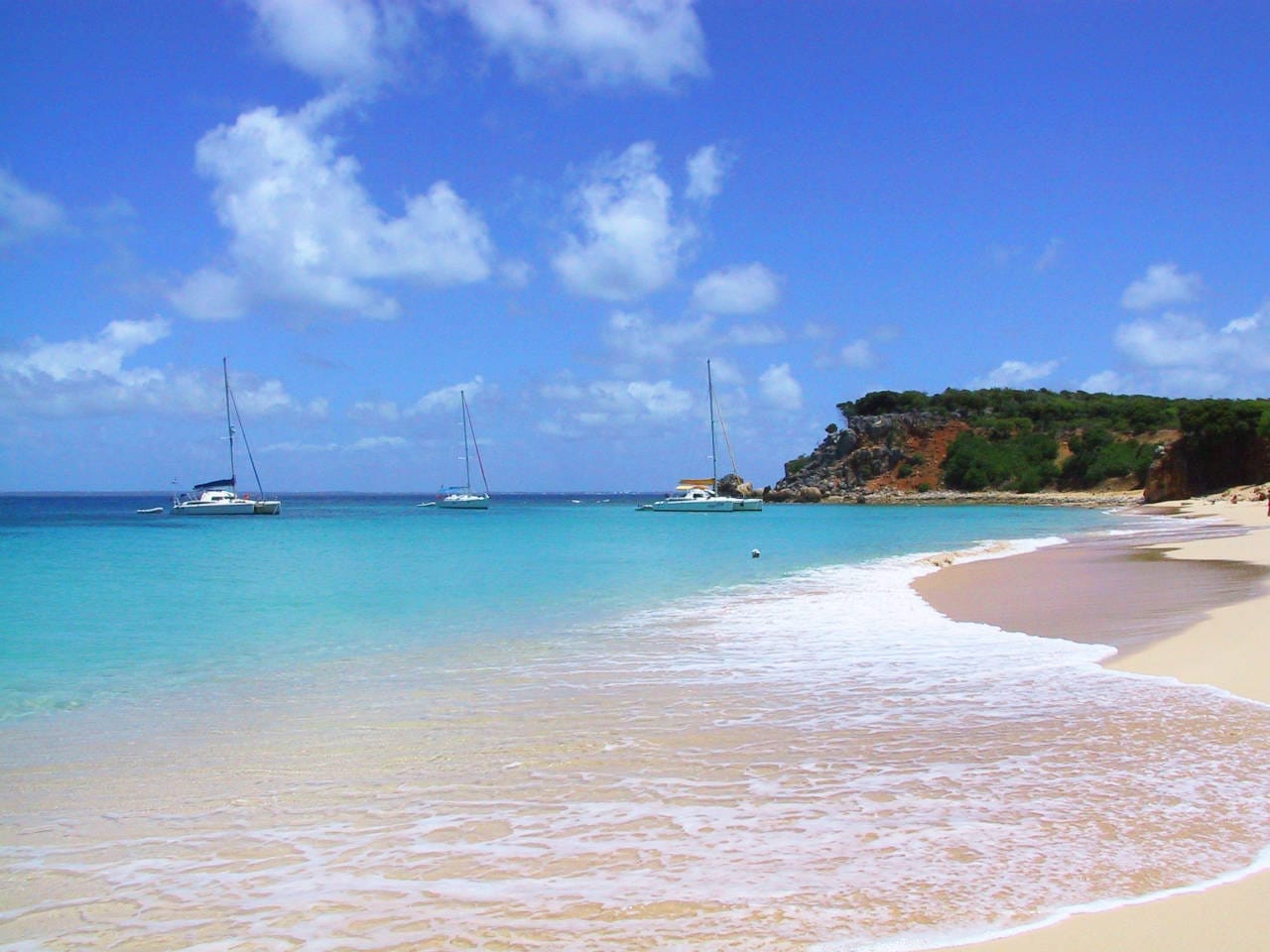
Tintamarre is a protected nature reserve, accessible only by boat. Day trip excursions depart from several points on the French side and from Oyster Pond on the Dutch side. The crossing takes approximately 20 to 30 minutes depending on conditions.
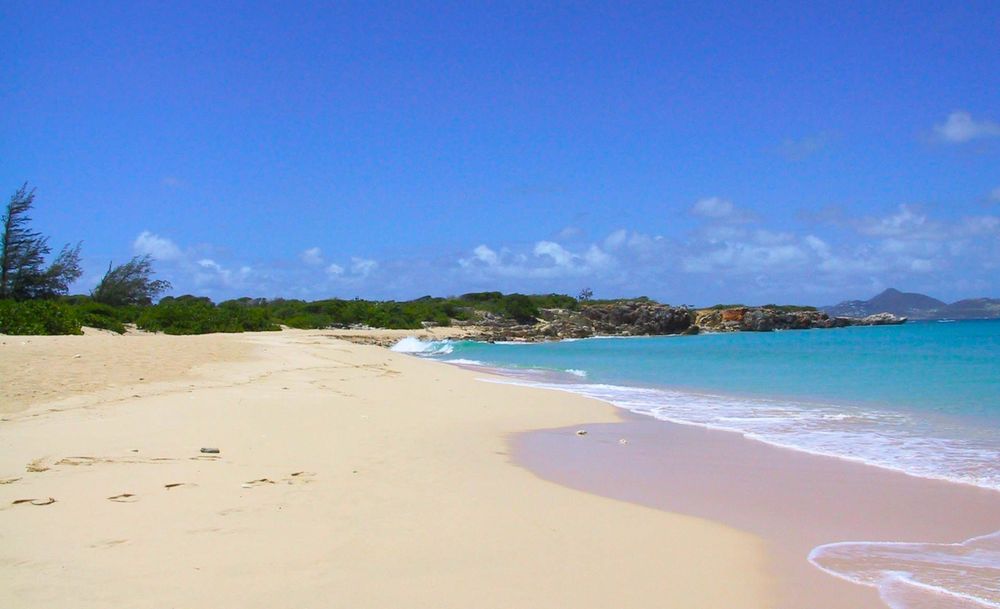
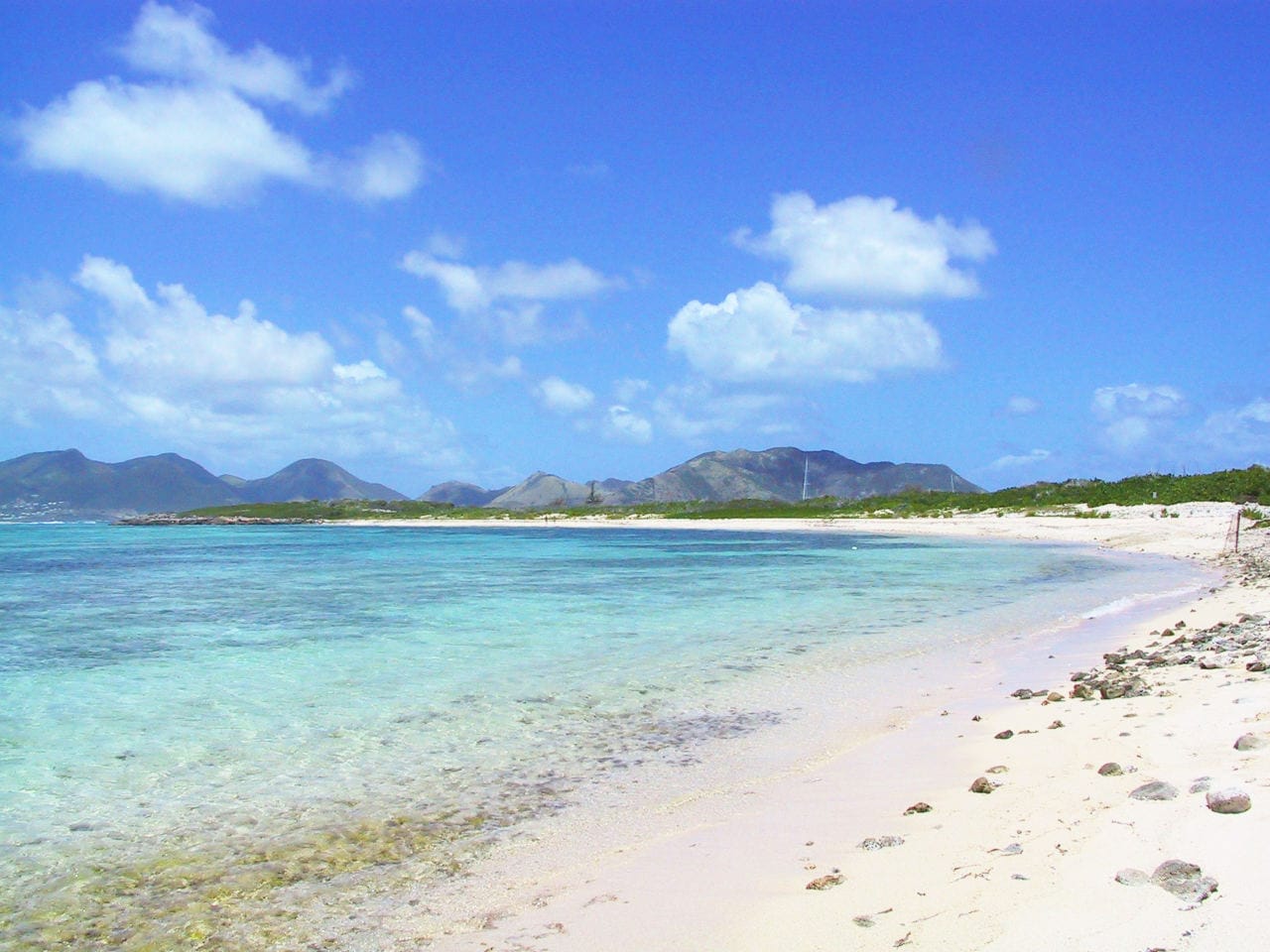
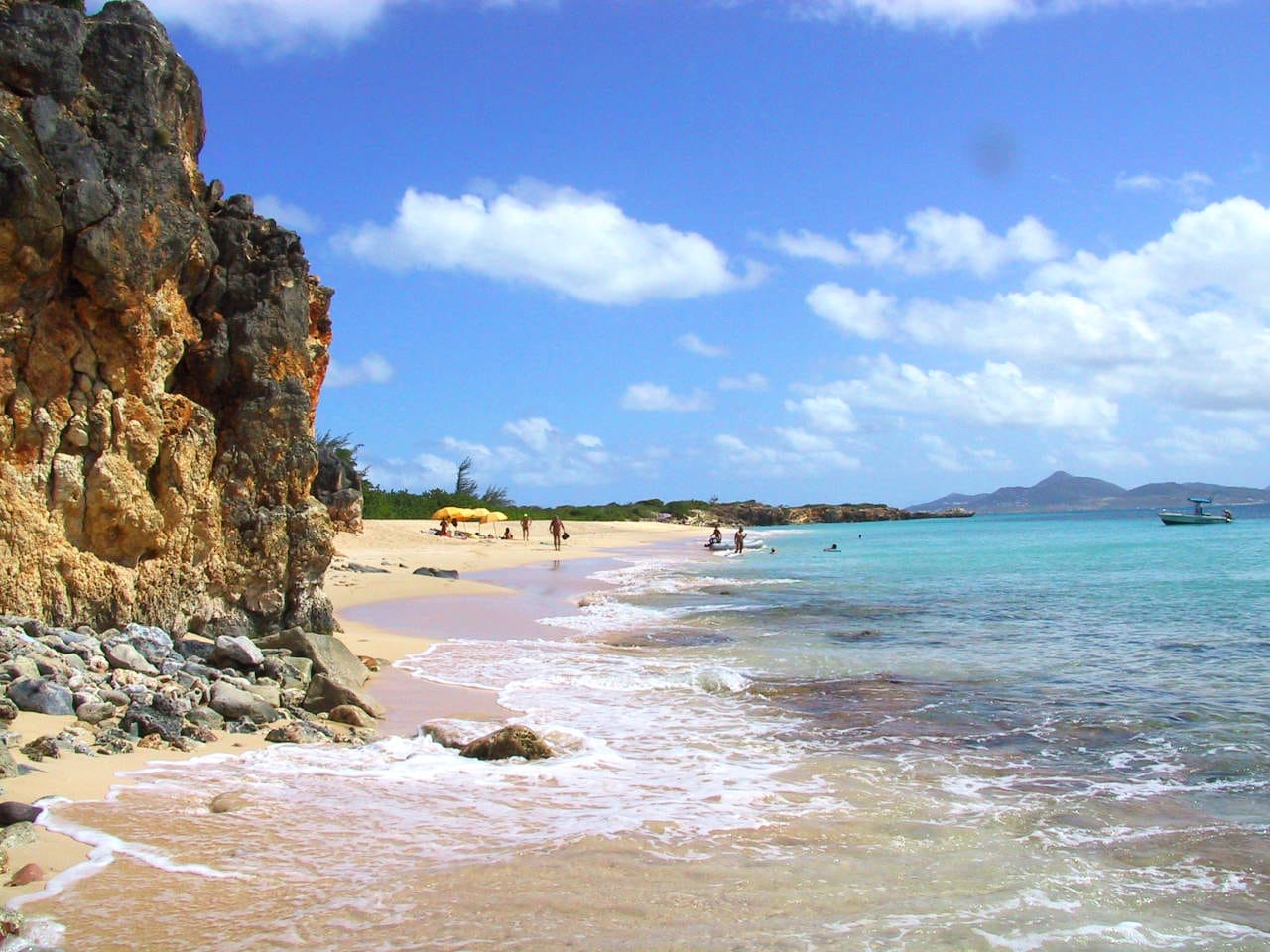
The snorkeling around the island is among the best accessible from Sint Maarten — coral, reef fish, and exceptionally clear water on calm days. The beach on the western side is sheltered and quiet. There are no facilities, no vendors, no permanent structures beyond what history left behind.
If you walk the shoreline and find the old concrete docks, you are standing on what remains of the submarine base. There is no sign explaining what they are. There is no plaque, no information board, no official acknowledgment of what happened here during the war. The island keeps its history to itself, and most visitors leave without knowing they walked past it.
Now you know
Practical Information
| 📍 | Tintamarre Island, 2 miles offshore |
| 🚗 | You have to book a daytrip with one of the charter companies |
| 🚶 | The complete island can be explored on foot, but it is larger than the map suggests. For hiking, you must bring decent shoes and take water along. |
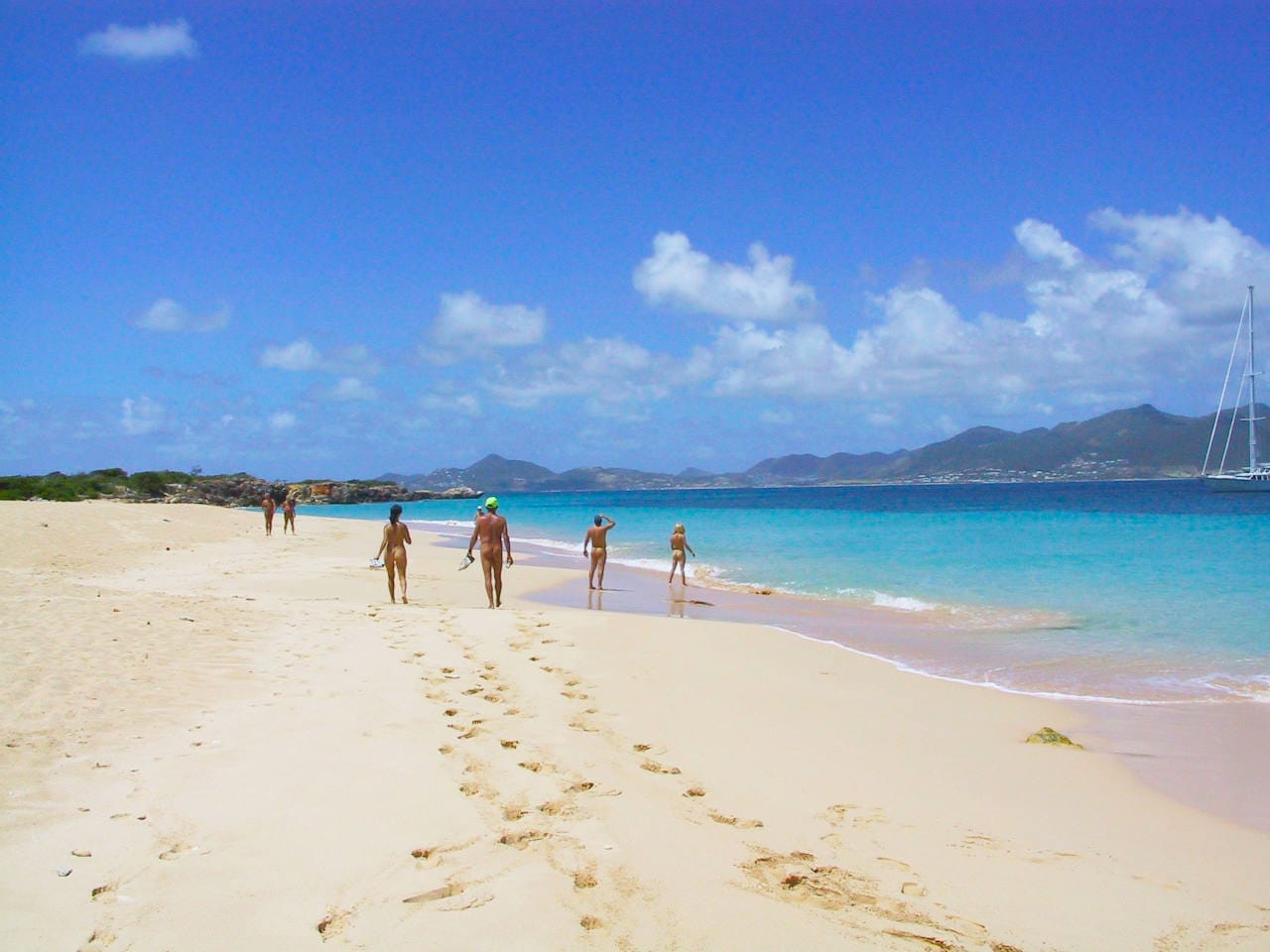
| 👙 | Many times, the beaches on Tintamarre are clothing optional |
| 🍽️ | No facilities! Food and beverages have to be supplied by the boat operator |
| 🅿️ | Parking at the dock of the charter company |
| 🏖️ | There is some shade under some trees. No chairs, no umbrellas |
| 🕐 | For yacht owners and charter sailors: Overnight anchoring is not encouraged. It is an open roadsted with not much protection |