Philipsburg — Capital of Dutch Sint Maarten
Philipsburg occupies one of the more unlikely pieces of real estate in the Caribbean: a narrow strip of land barely 500 meters wide, squeezed between Great Bay to the south and the Great Salt Pond to the north. Founded in 1763 by John Philips, a Scottish captain in service of the Dutch navy, it grew quickly into a trading port of regional importance. Today it is the capital of Sint Maarten, the main cruise port of call, and the duty-free shopping center of the Lesser Antilles.
Front Street and Back Street
Two roads run the length of Philipsburg — Front Street along the bay, and Back Street one block behind it.
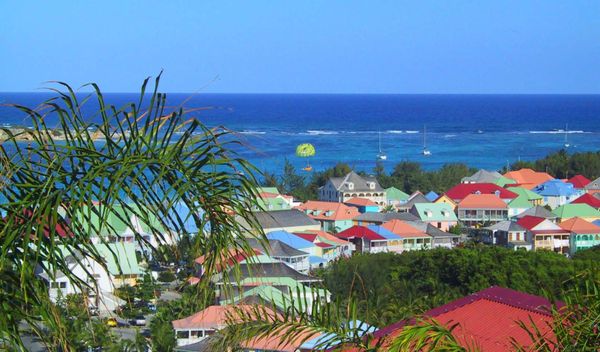
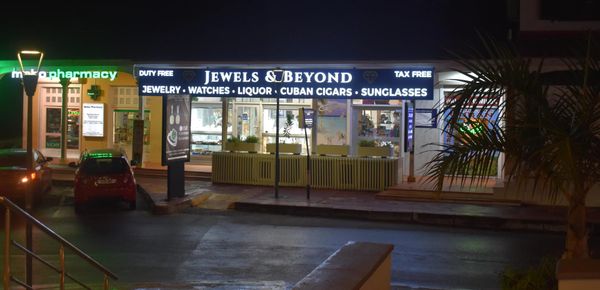
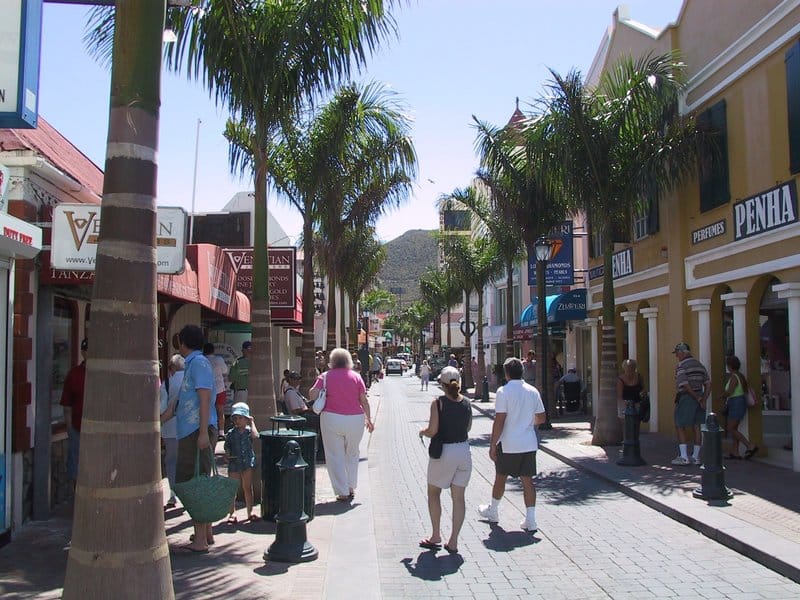
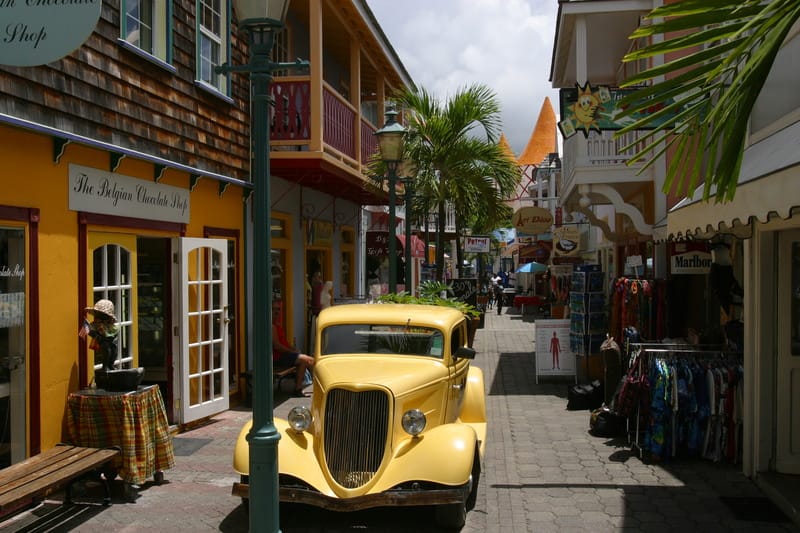
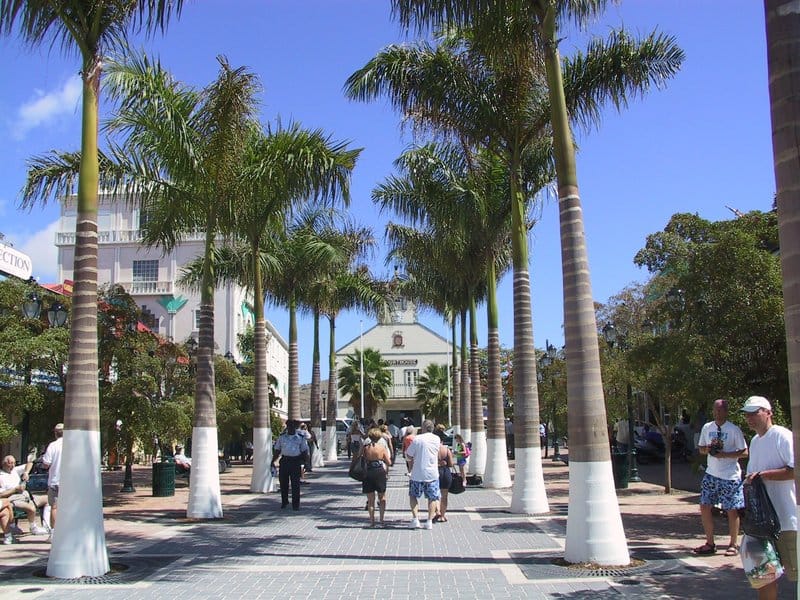
Front Street is the cruise passenger street. Duty-free shops selling jewelry, watches, electronics, liquor, and perfume line both sides, interspersed with restaurants, cafés, and well-preserved historic buildings. The town's traditional West Indian architecture — pastel colors, second-floor verandas, wooden shutters — survived the hurricanes and has been carefully maintained and rebuilt. The Courthouse at the center of Front Street, a white wooden structure built in 1793, still functions as Sint Maarten's courthouse. The Sint Maarten Museum nearby offers a compact introduction to island history, including Arawak pottery and artifacts from a British vessel that sank in Great Bay in 1801.
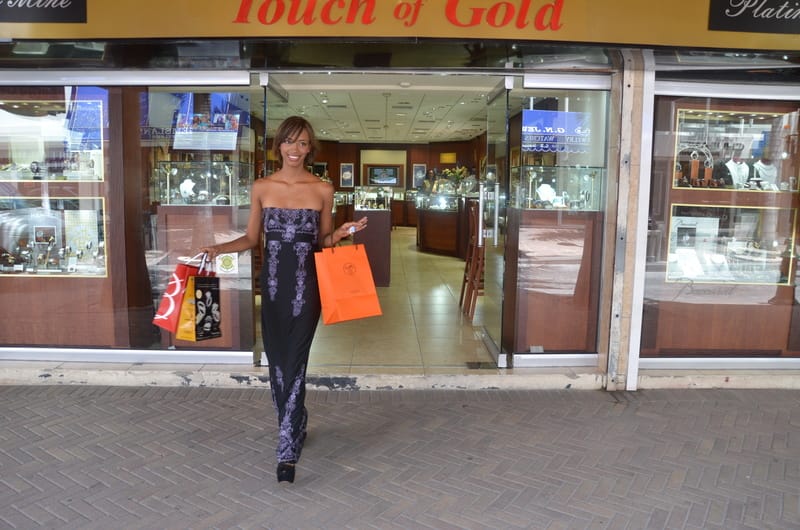
Front Street is colorful, commercial, and professionally run. The jewelry stores in particular are legitimate operations — the duty-free advantage on Sint Maarten is real, and Front Street is where to use it.
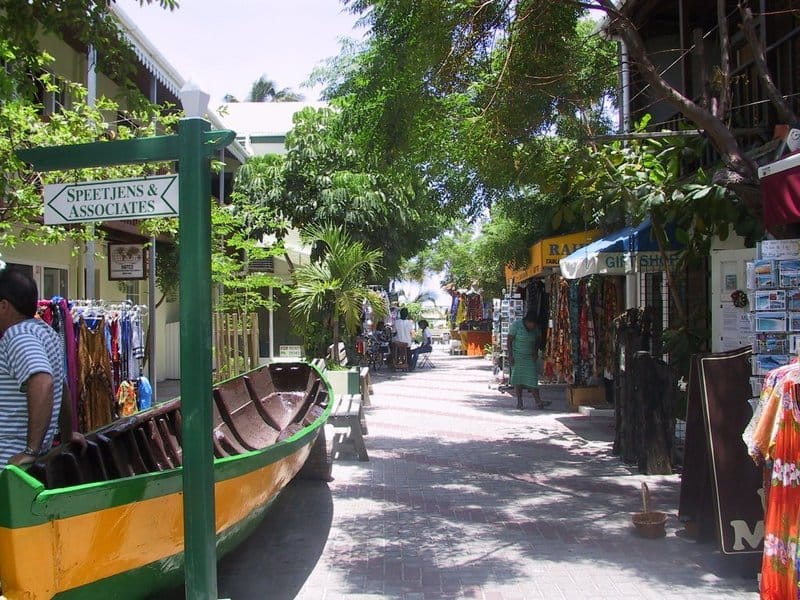
Back Street is a different world entirely, and one that most cruise passengers never find. This is the shopping destination for the wider Lesser Antilles — residents of Anguilla, Antigua, St. Kitts, Saba, St. Eustatius, and islands as far as Dominica make the trip to Philipsburg specifically for Back Street. Without Sint Maarten's duty-free status, everyday goods cost significantly more on smaller neighboring islands. Back Street supplies the necessities: clothing, household goods, electronics, food products, hardware, and everything else that makes up ordinary life at prices that justify the boat or plane ticket to get here.
A word of honest advice: Back Street is not the place to buy branded luxury goods. The Rolex offered for $200 is not a Rolex. The Adidas sneakers may or may not be Adidas. Nobody on Back Street will pretend otherwise, and nobody expects you to believe otherwise. But for the practical, the everyday, and the genuinely affordable, Back Street is exactly what it claims to be — and the hundreds of thousands of Antilleans who shop here regularly are proof enough of that.
Beyond Front and Back Street, Philipsburg extends further inland toward the Pond Fill, where Carnival Village is located — a venue that genuinely deserves its own article and its own visit.
The Waterfront and Great Bay Beach
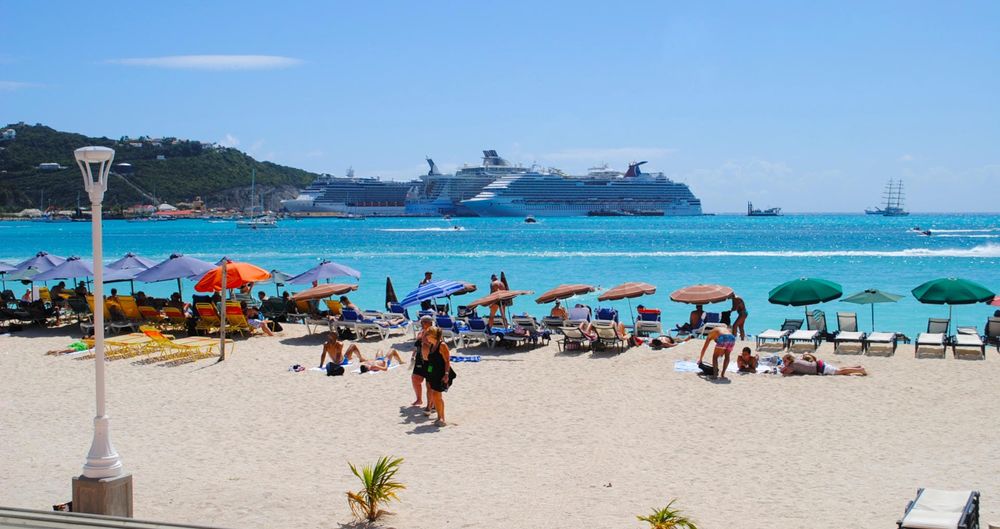
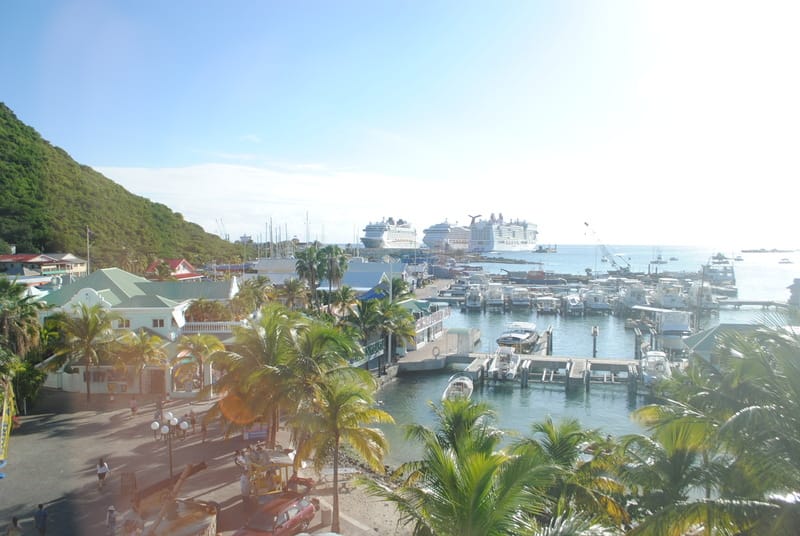
The Boardwalk along Great Bay connects the cruise pier to the center of Front Street. Cruise passengers arriving by tender — the small boats shuttling visitors from ships anchored in the bay — land at the town pier. Those who prefer to walk from the cruise docks will find a pleasant footpath lined with bars and restaurants along the way.
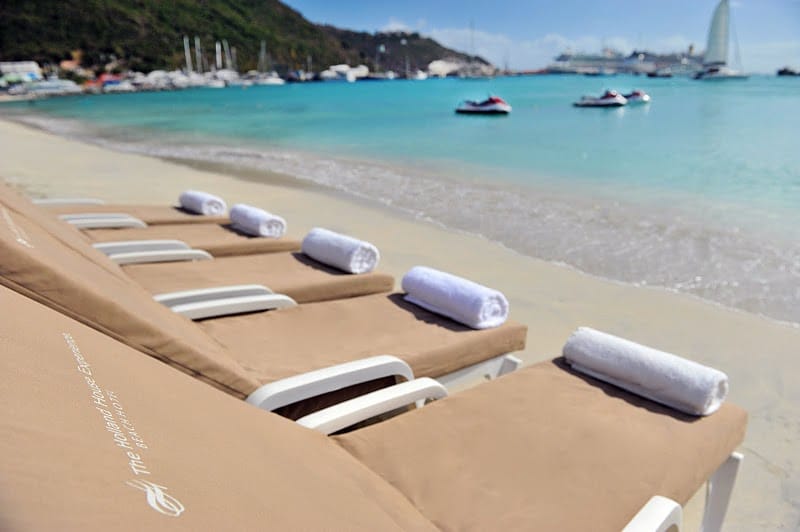
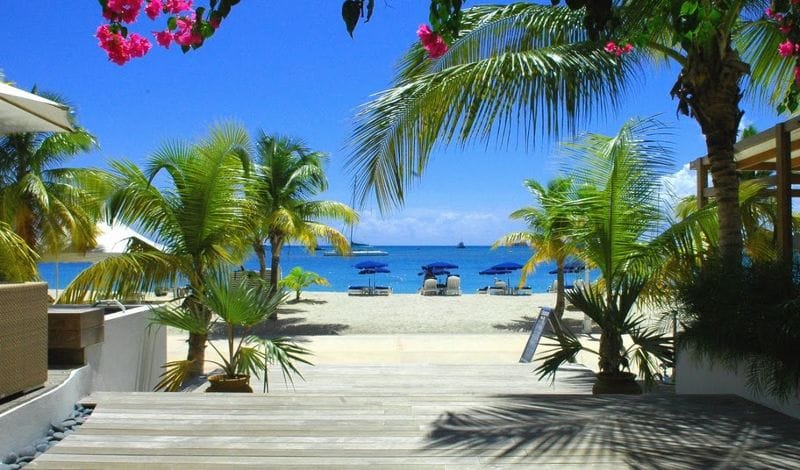
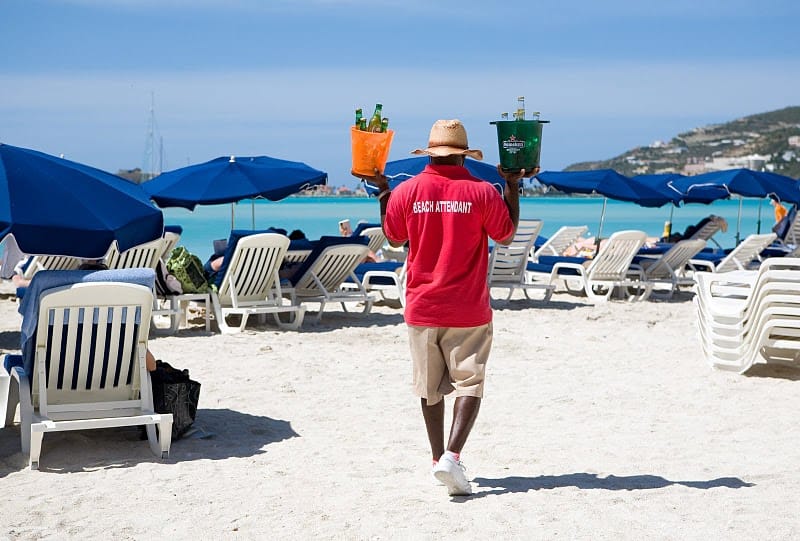
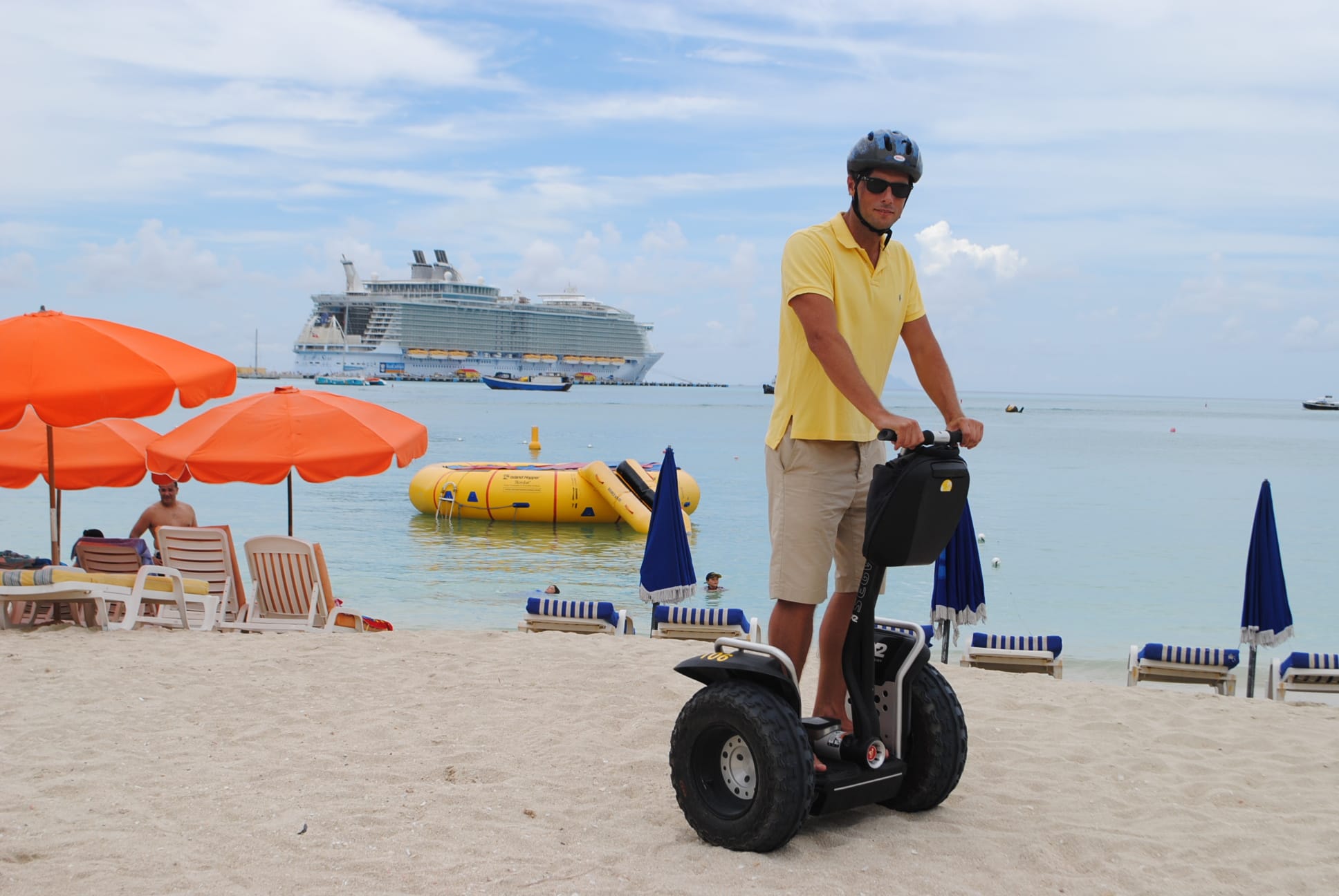
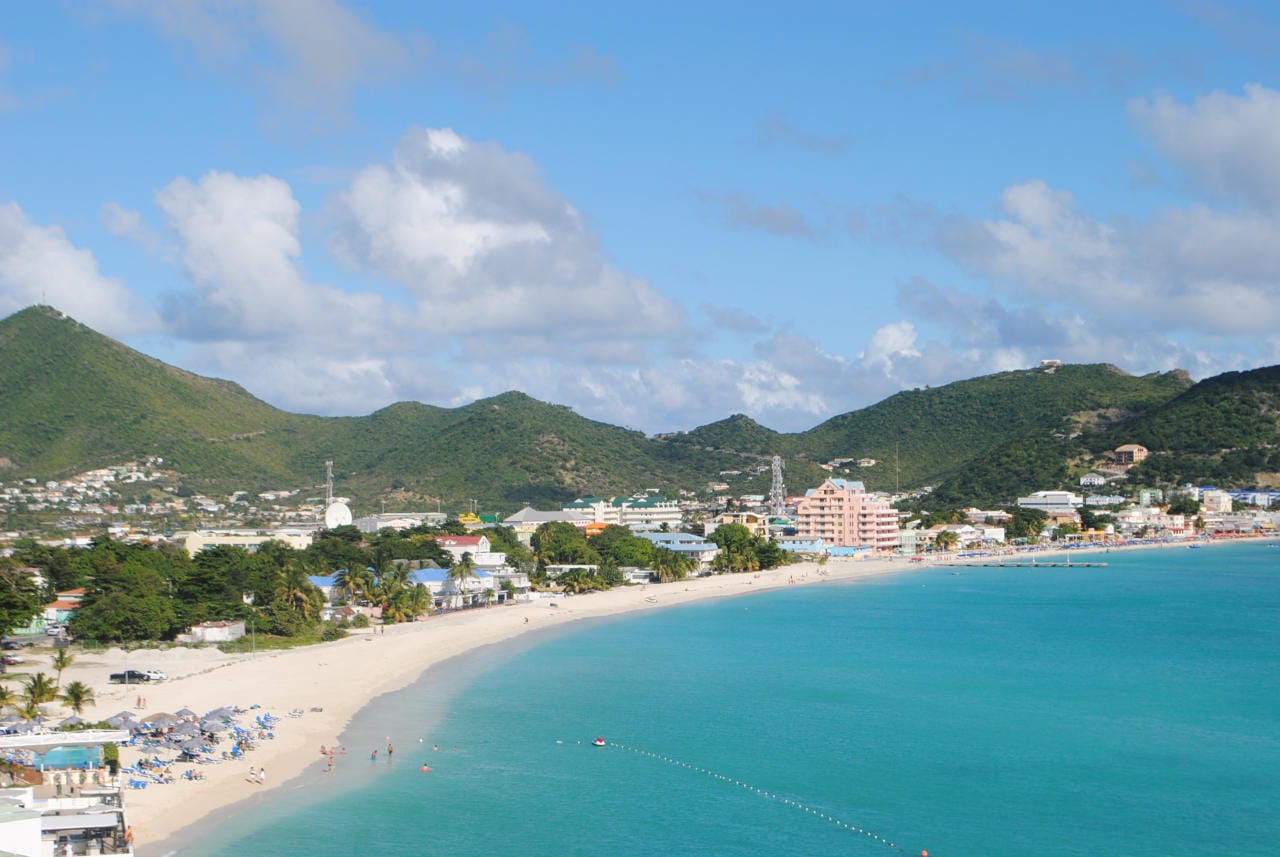
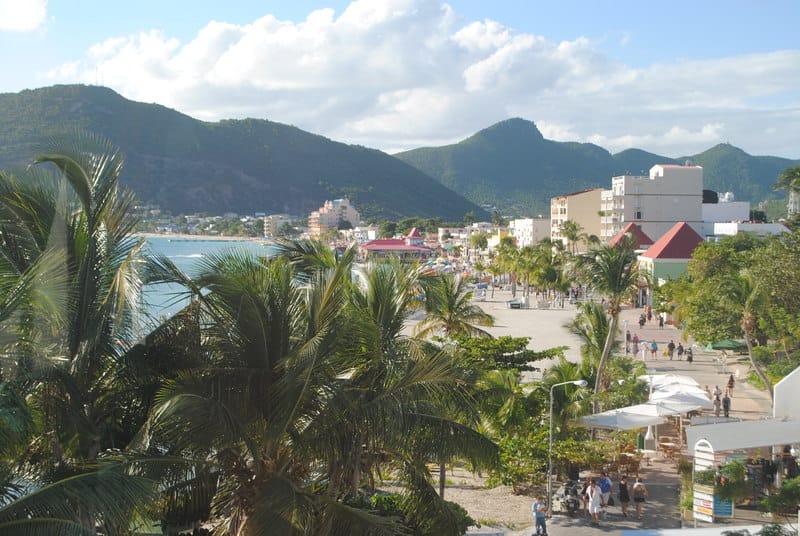
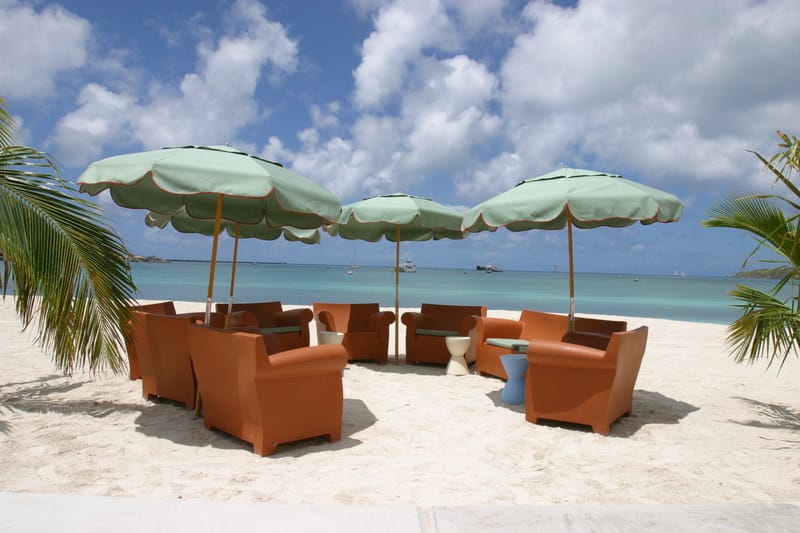
Great Bay Beach itself runs the length of the waterfront and is one of the most convenient beaches on the island for visitors without a rental car. It is a genuinely fine Caribbean beach — calm water, white sand, easy access — and it serves its purpose admirably: a place to get a sunburn, have a few drinks, and enjoy the Caribbean for a few hours before the ship sails. It is not a secluded paradise, but it was never trying to be.
The Forts — Save Your Energy
Philipsburg has two historic forts, Fort Amsterdam and Fort Willem. Both are described in every guidebook as worth visiting. In reality, neither is. The remaining walls are minimal, the sites are not well maintained, and the views, while pleasant, do not justify the effort.
If you want a fort with genuine character, remarkable views, and a real sense of history, save it for Fort Louis on the French side above Marigot. It is the best fort on the island — not quite Brimstone Hill in St. Kitts, which is one of the finest in the entire Caribbean, but a genuine destination with commanding views over Marigot and Simpson Bay Lagoon. Worth every step of the climb.
The Salt Pond
Behind the town, the Great Salt Pond that once defined Philipsburg's northern boundary is rapidly shrinking. Successive land reclamation projects have filled in large sections, creating additional territory used primarily for industrial purposes and the Carnival Village. What most visitors and many residents prefer not to discuss openly is what the fill consists of: Sint Maarten's garbage. The island's waste is deposited directly into the pond behind its own capital, making Philipsburg almost certainly unique among capital cities in the world for having its national landfill at the center of town.
It is a problem the government has acknowledged for years. It has not been resolved. Visitors exploring beyond Front and Back Street toward the Pond Fill will notice the smell on warmer days. Now they will also know why.