Marigot — Capital of French Saint-Martin
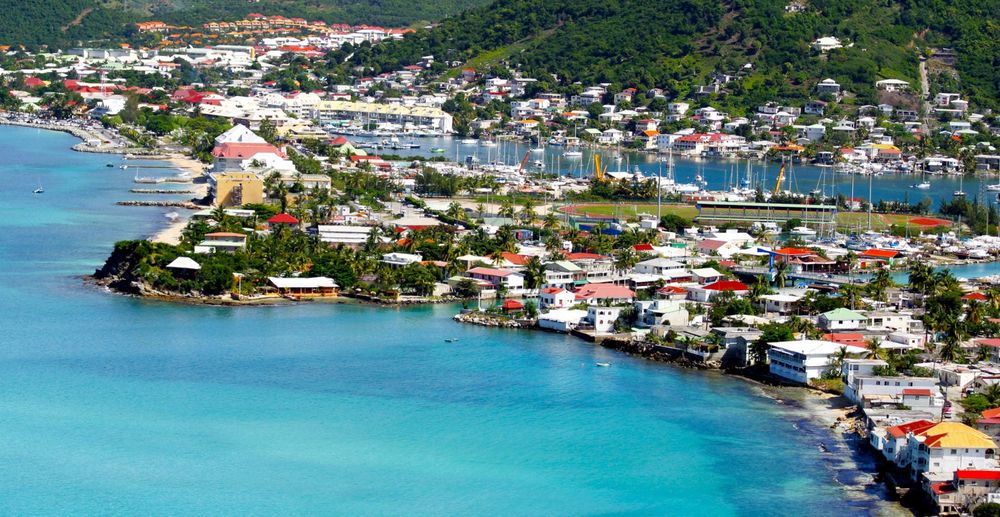
Marigot is the administrative capital of French Saint-Martin and one of the more charming small towns in the Caribbean. It is not a tourist stage set. People live and work here, the market runs twice a week, the civil servants go to lunch at noon and the town quiets down accordingly, and Fort Louis watches over everything from the hill above. It feels like a French provincial town that somehow ended up in the tropics — because that is more or less what it is.
Fort Louis
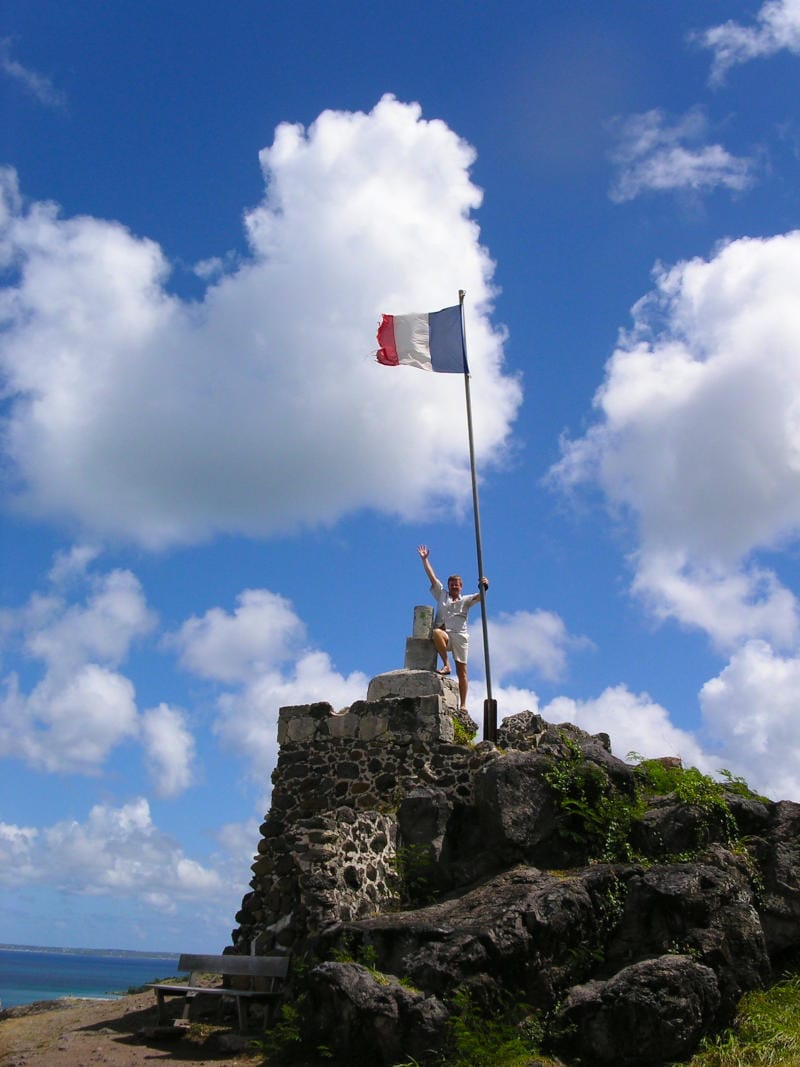
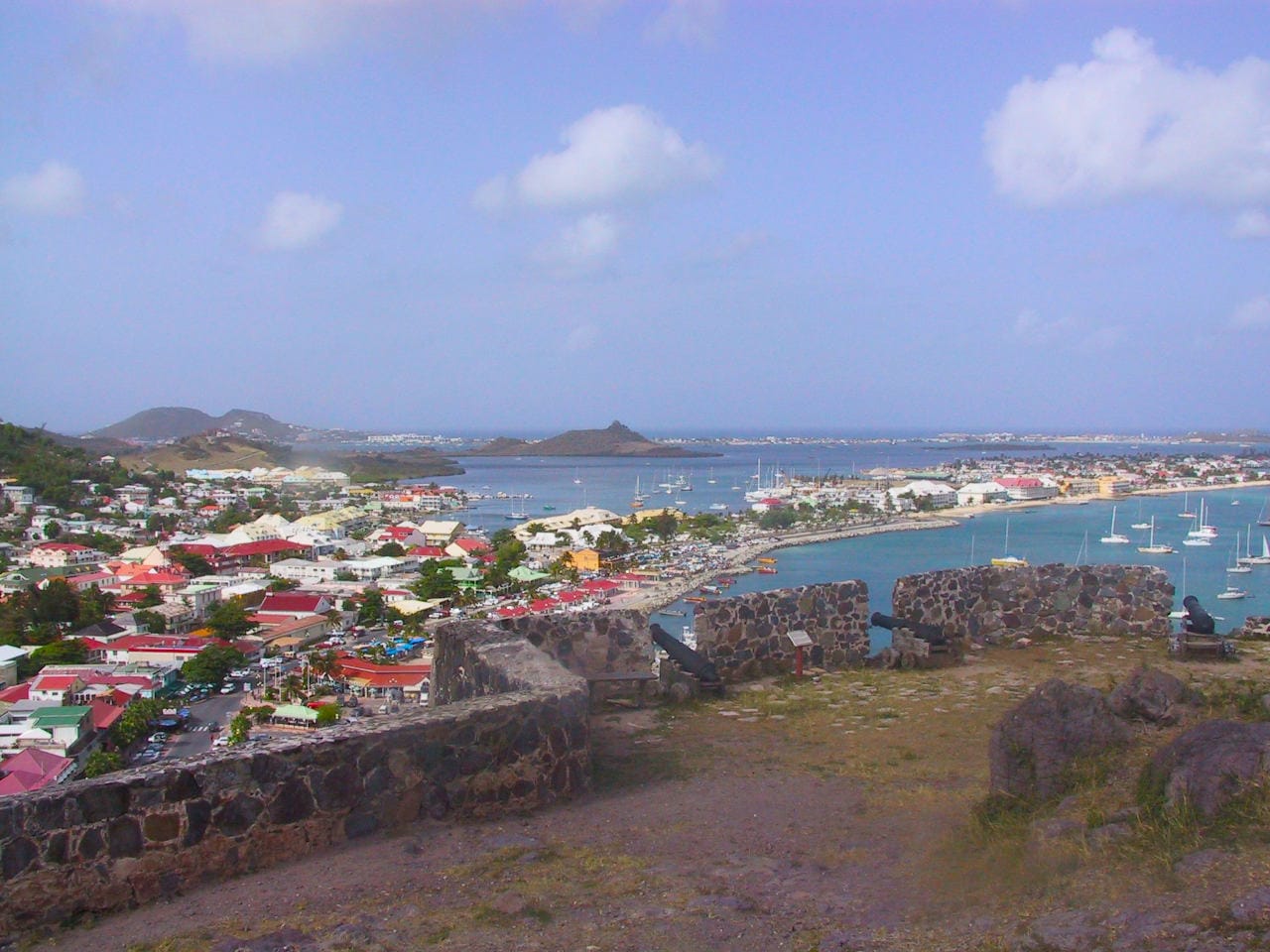
The fort above Marigot is the best on the island and one of the most rewarding short climbs in the Lesser Antilles. Built by the French in 1789 to protect the harbor and the salt pond, it was captured by the British, returned, neglected, and eventually restored. The walls are intact, the cannons are still there, and the view from the top — over Marigot Bay, Simpson Bay Lagoon, Anguilla to the north, and the Dutch side to the south — is exceptional. The climb takes about 15 minutes from the waterfront. Go in the morning before the heat builds.
This is the fort worth visiting on this island. The Dutch forts in Philipsburg are not.
The Market
The open-air market on the waterfront runs on Wednesday and Saturday mornings. It is a genuine working market — fresh produce, spices, local crafts, clothing, and the kind of browsing that rewards patience. It draws locals from both sides of the island and is one of the few places on Sint Maarten — Saint Martin where the Caribbean identity of the island is immediately apparent. Go on Saturday when it is at its fullest.
Marina Royale
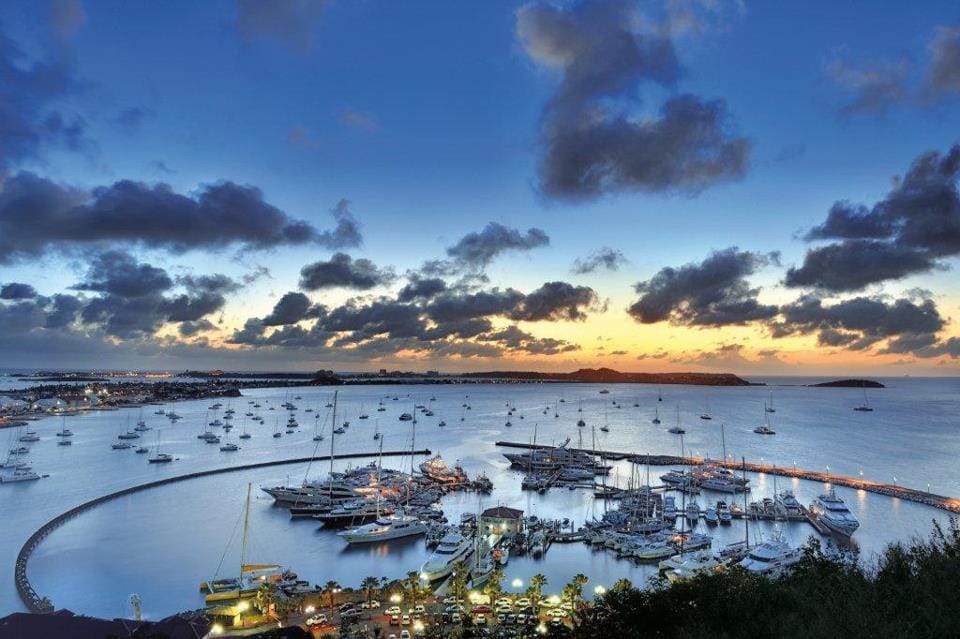
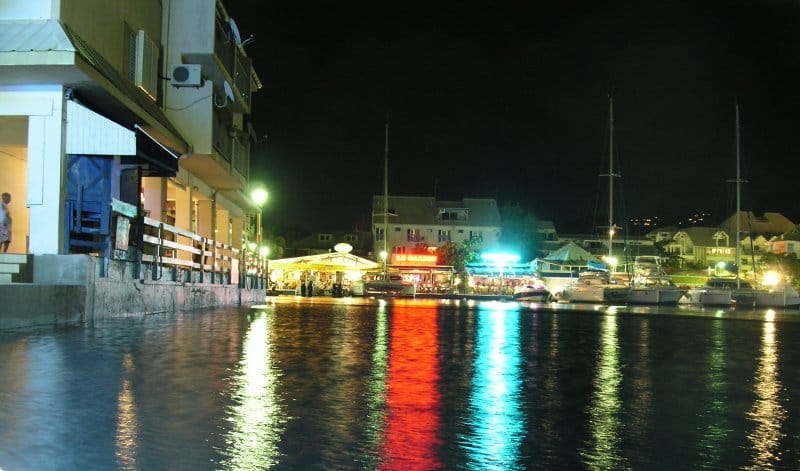
The marina at the center of downtown is the social anchor of Marigot. Restaurants line the waterfront, yachts and charter boats are moored just below the terrace tables, and the setting at sunset is genuinely lovely. The quality of the restaurants around the marina is variable — some are excellent, some are living on the view — but the atmosphere is reliably good, and the people-watching is first rate.
Getting Around Marigot
Marigot is one of the most walkable towns on the island. The market, Marina Royale, Fort Louis, the West Indies Mall, the ferry terminal, and the waterfront restaurant strip are all within easy walking distance of each other. A visitor can arrive, spend three or four hours exploring on foot, eat well, climb the fort, browse the market, and catch a ferry to Anguilla — without once needing a car. In that respect it compares favorably with Philipsburg, where the layout is more linear and the cruise ship crowds make leisurely walking less pleasant.
The Waterfront
From the Anguilla ferry terminal westward, Marigot's waterfront has developed into one of the most diverse eating destinations on the island. A double row of local eateries lines the waterfront — roughly 30 restaurants at last count, offering a remarkable variety of cuisines and price points. This is where the island's multicultural character expresses itself most visibly on a plate. It is one of the best places on Sint Maarten — Saint Martin to eat well without spending a great deal.
The West Indies Mall and Ferry Terminal
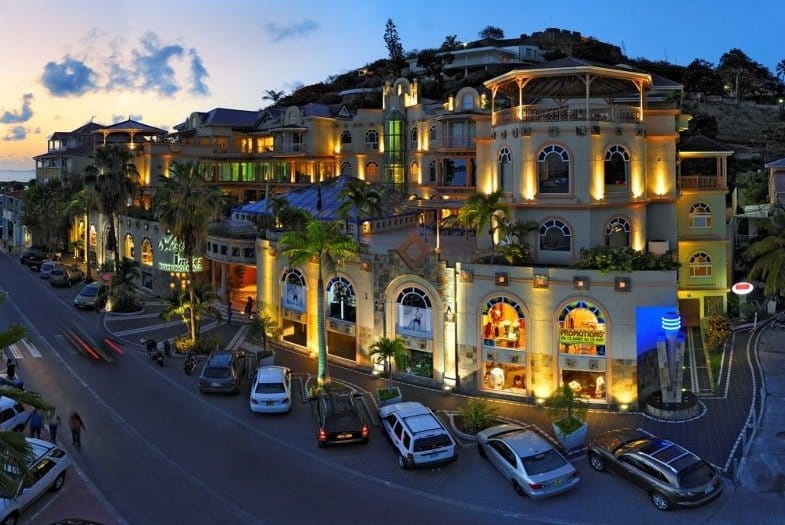
At the eastern end of town, the West Indies Mall is fully operational — an architecturally eccentric building housing a mix of boutiques and shops in air-conditioned comfort. Next to it is the ferry terminal for the regular boat service to Anguilla, a crossing of about 25 minutes that makes a half-day or full-day trip to the neighboring island straightforward. Ferries run frequently throughout the day.
Shopping in Marigot — and Hope Estate
Marigot's boutiques carry European fashion and goods not available on the Dutch side, and the quality of what is available in the better stores is generally higher than in Philipsburg's tourist-facing retail. That said, Marigot's retail draw has weakened over the past decade as Hope Estate — the commercial district on the eastern side of the island — has grown rapidly into a prime shopping destination. Supermarkets, hardware stores, furniture retailers, and everyday services that would once have brought customers into Marigot now have a closer and more convenient alternative. The town remains worth exploring for its boutiques and character, but it is no longer the undisputed commercial center of the French side.
The Currency Question
Marigot operates in euros. The current exchange rate means that visitors paying in US dollars or by credit card are effectively paying a premium of around 15 to 20 percent compared to what the same goods would cost priced in dollars. This matters for shopping, dining, and groceries. The practical advice for visitors is to pay in US dollars cash wherever possible on the French side — most merchants accept dollars, though not always at a favorable rate. For a full explanation of how to navigate the currency situation intelligently on both sides of the island, read our guide to grocery shopping on St-Maarten.
Speed 2: Cruise Control — Marigot's Unlikely Film Credit
In 1997, Marigot's waterfront became a Hollywood film set. The production of Speed 2: Cruise Control — a sequel that has since achieved a certain fame for reasons unrelated to its quality — chose Marigot for its climactic sequence in which a cruise ship crashes into the town. A full-scale mock-up of a cruise ship was constructed and actually driven into the Marigot waterfront as part of the shoot. It was, by all accounts, an extraordinary production to witness. The film was not well received. The waterfront recovered.
What Marigot Is
Marigot was spared the fate of becoming a cruise ship port, and that decision — whether deliberate or simply a consequence of the harbor's limitations — preserved the town's character. It is not trying to sell you anything in particular. The restaurants exist for people who live here as much as for visitors. The market exists for the same reason. Fort Louis exists because it has always been there.
One thing Marigot does not offer is a beach worth visiting. Whatever a map suggests about the shoreline near town should be disregarded. The waterfront is a working harbor, the nearby strips of sand are not suitable for swimming or sunbathing, and no visitor who comes expecting a beach day will be satisfied. Marigot is a town to visit, not a beach destination. The beaches are elsewhere — and with a rental car, they are not far.
It is the most authentically Caribbean town on the island, and for visitors who make the effort to cross from the Dutch side, it is almost always a surprise.