Island Dogs: What Visitors to St. Maarten Should Know
One of the first things many North American visitors notice on St. Maarten — sometimes before they've left the airport road — is the dogs. Dogs walking along roadsides. Dogs resting in the shade outside restaurants. Dogs moving through neighborhoods with what looks like quiet purpose. The instinct, for visitors from places where a dog on the street signals trouble, is concern. Sometimes alarm.
The reality is more layered, and more interesting, than it first appears.
Three Very Different Situations
Not all freely moving dogs on this island are in the same situation. Understanding the difference matters — both for the visitor's peace of mind and for the island's ongoing effort to manage animal welfare responsibly.
Dogs with owners who allow freedom to roam. Part of St. Maarten's relaxed attitude toward dogs on the street comes directly from its European cultural background, where dogs have traditionally been given considerably more independence than is common in North America. A dog that has grown up with freedom to move develops a kind of street maturity: it learns to go about its business, avoid conflict, watch for traffic, and return home reliably. These animals are not lost. They are not homeless. They are simply operating under a different set of rules than visitors are accustomed to.
Neglected dogs. A harder category to witness. Someone technically claims ownership of these animals, but the relationship ends there — no adequate food, no veterinary care, no meaningful attention. Many are kept on chains. They are not free-roaming in any real sense; they are simply uncared for. This is the genuinely sad situation visitors sometimes encounter, and it is the one that most warrants concern.
True street dogs. These are feral animals — born wild, raised in packs, with no meaningful imprint toward human contact. They spend their days in the bush and move mostly at night. They are drawn to properties with swimming pools, where they can find fresh water, which is a more pressing need for them than food. They are notably shy: some will flee at the sight of a person, others maintain a distance of ten meters or so, but none will allow themselves to be touched. They are not aggressive toward people, but they cannot be domesticated in any practical sense. Even puppies born into feral packs resist human contact with surprising determination from their earliest weeks.
The Story of Lola
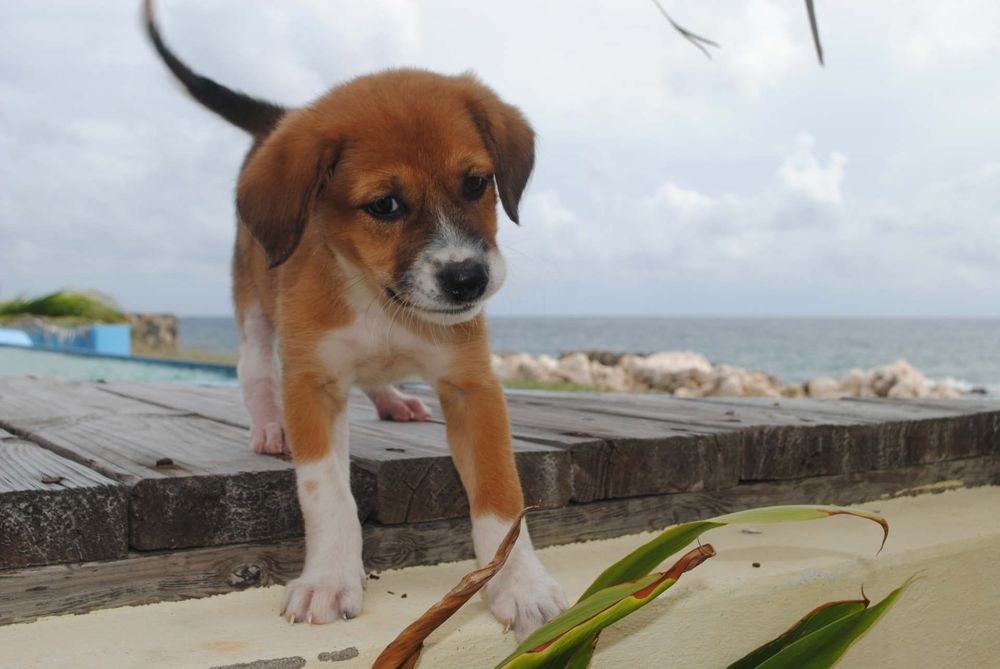
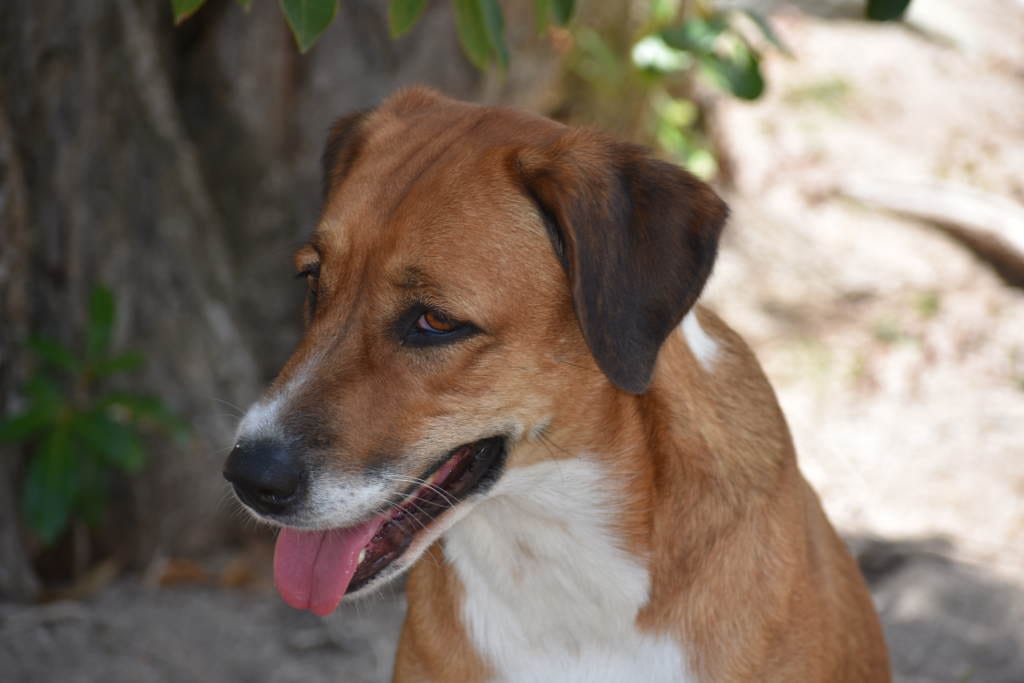
Lola arrived as a ten-week-old puppy of unknown pedigree, nearly killed by a group of teenage boys and rescued at the last possible moment. She found a foster home. She grew up safe, cared for, and loved.
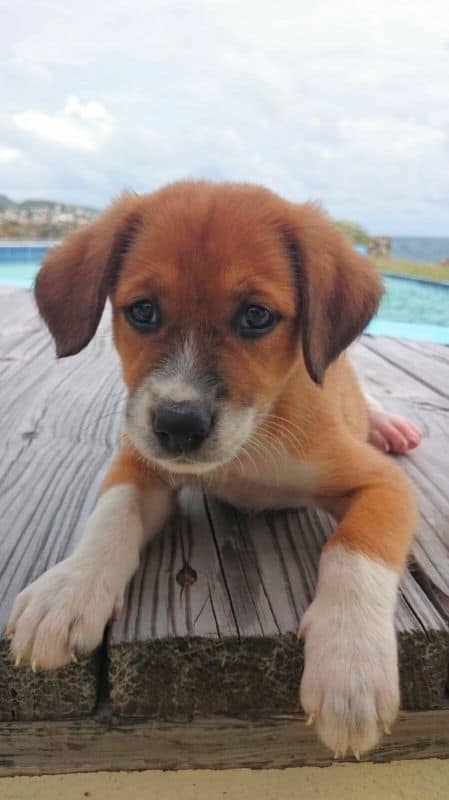
Lola's story is not unusual on this island — in either direction. Cruelty happens. So does rescue. The space between those two outcomes is where most of the island's animal welfare work takes place.
What Is Being Done
St. Maarten has an active and serious animal welfare community. The Animal Welfare Foundation operates a program that traps feral dogs, has them spayed or neutered — procedures performed free of charge by the island's veterinarians — and releases them back into their territories. Even injured feral animals receive emergency medical care at no cost.
The goal is not to remove street dogs and force domestication on animals that cannot adapt to it. The goal is to stop uncontrolled breeding and gradually reduce the feral population through attrition, while allowing existing animals to live out their lives as they are. It is a pragmatic and humane approach, and it has succeeded in limiting population growth — though it depends on continued community and visitor support to sustain the work.
The Animal Welfare Foundation can be found at sxmanimalwelfare.org.
What Visitors Can Do
If you see a dog that appears injured or in acute distress, the Animal Welfare Foundation is the right contact. If you see a free-roaming dog that appears healthy and self-possessed, it is most likely exactly what it looks like: a dog going about its day.
Feeding street dogs is well-intentioned but can create dependency and territorial clustering around specific locations, which the welfare organizations generally discourage.
The dogs of St. Maarten are part of the island's texture. Understanding them makes the island a little more legible — and the concern visitors feel a little easier to carry.